Which Countertop Finish Is Right You?
Choosing a countertop isn’t just about color and stone type. The finish changes how the material looks, feels, and performs every single day. Here’s how leathered, honed/suede, and polished finishes compare, and how to pick the right one for your kitchen or bathroom.
Why Finish Matters So Much
When homeowners across Charlotte, Lake Norman, Cornelius, Huntersville, Davidson, and Mooresville start selecting granite, quartzite, or marble for a kitchen or bath remodel, most of the attention goes to color and veining. But the surface finish- how the stone is physically processed after cutting- has just as much impact on the final look, feel, and long-term performance of the countertop.
The same slab of granite or quartzite will look like three completely different materials depending on whether it’s finished leathered, suede/honed, or polished. Understanding the difference helps you choose a finish that matches your design goals and your household’s daily habits.
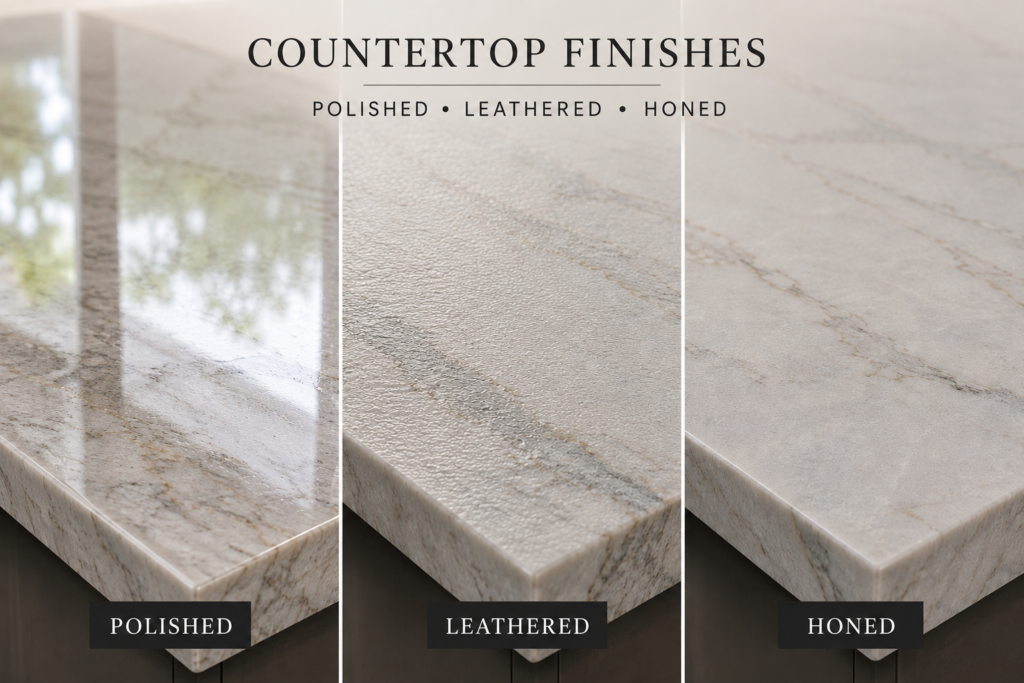
Polished Finish: The Classic, High-Shine Look
A polished finish is the most traditional and widely recognized countertop finish. The surface is ground and buffed to a high sheen that reflects light, deepens color saturation, and makes veining and pattern pop.
Characteristics of polished finishes:
- Glossy, reflective surface
- Enhances color depth and contrast in the stone
- Smooth to the touch
- Easiest of the three finishes to keep clean, since the tight, sealed surface resists staining
- Shows fingerprints, water spots, and smudges more readily than textured finishes
Best for: Homeowners who want a bright, formal, traditional kitchen look, or who want to maximize the visual impact of a dramatic stone with bold veining.
Leathered Finish: Texture With Dimension
A leathered finish is created by running a diamond-tipped brush across the stone’s surface after honing. Instead of grinding the surface flat and smooth, the brushing process works with the stone’s natural mineral structure- softer minerals wear down slightly more than harder ones- creating a subtle, rippled surface with noticeably more depth than a flat polished or honed slab.
Characteristics of leathered finishes:
- Low-sheen, matte-to-satin surface with visible texture
- Texture is created by brushing along the natural mineral structure of the stone, so texture and pattern can vary across a single slab
- Fingerprints and water spots are significantly less visible than on polished surfaces
- The slightly textured surface makes very fine scratches less noticeable over time
Best for: Kitchens and bathrooms where homeowners want a natural, organic, high-end look with a more forgiving, low-maintenance-feeling surface- especially popular in modern farmhouse, transitional, and contemporary Lake Norman-area homes.
Honed/Suede Finish: The Softest, Most Subtle Option
A suede or honed finish is created through a lighter, more refined honing process that leaves the surface smooth to the touch but with a soft, low-luster, almost velvety appearance rather than the deeper texture of a leathered finish.
Characteristics of honed/suede finishes:
- Smooth to the touch, unlike the more pronounced texture of a leathered surface
- Soft, muted matte appearance with minimal light reflection
- Colors typically read slightly lighter and softer than the same stone in a polished finish
- A quieter, more understated alternative for homeowners who like the low-shine look of leather but prefer a smoother surface
Best for: Homeowners who want the softness and understated elegance of a matte surface without the tactile texture of a leathered finish- often chosen for primary bathrooms, spa-style spaces, and minimalist kitchen designs.
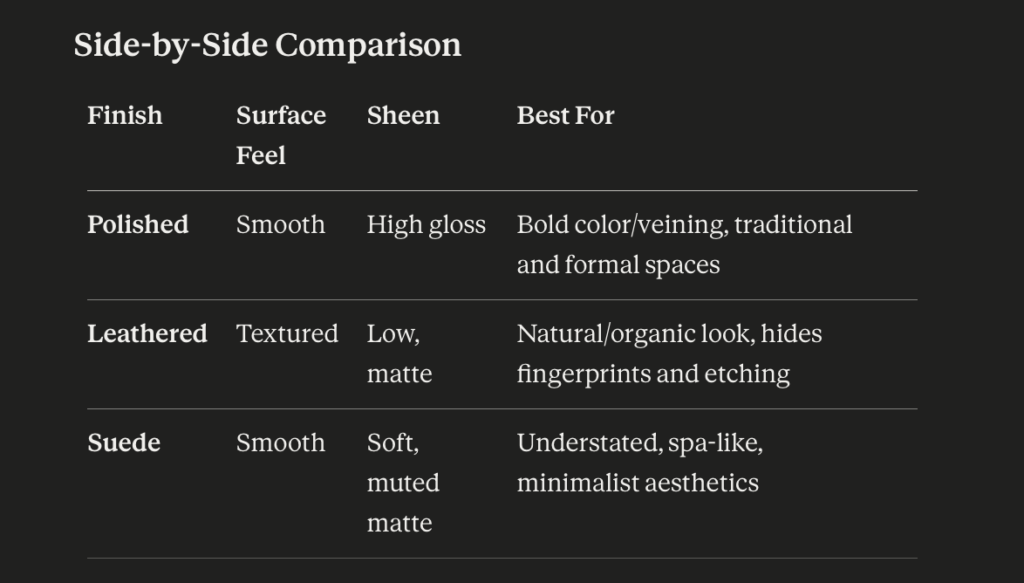
How Finish Affects Maintenance and Durability
Finish doesn’t just change appearance — it changes upkeep:
- Polished surfaces are the easiest to wipe clean but show smudges, water spots, and fingerprints the most.
- Leathered surfaces hide daily smudges and light etching better, which makes them a popular choice for busy kitchens, though the textured surface can require slightly more attention when cleaning up spills in the texture grooves.
- Suede surfaces offer a middle ground — easy to wipe down like a polished surface, with the forgiving, low-glare look of a matte finish.
Finish also interacts with the material itself, the same way edge profile choice does — softer or lower-quality stone and quartz can behave differently once honed, leathered, or textured, so material quality matters no matter which finish you choose.
Choosing the Right Finish for Your Charlotte or Lake Norman Remodel
The right finish comes down to three questions:
- What’s your design style? Traditional and formal spaces often lean polished; modern, organic, and transitional spaces often lean leathered or suede.
- How is the space used? High-traffic kitchens with kids or frequent cooking may benefit from the fingerprint- and smudge-hiding qualities of leathered or suede finishes.
- What stone are you using? Not every material takes every finish equally well – some granites and quartzites leather beautifully, while others show inconsistent texture.
See and Feel the Difference Before You Decide
Photos and website images can’t fully capture the difference between a leathered, suede, and polished finish. Texture, light reflection, and color depth all read differently in person. Our design and construction team works with homeowners throughout Charlotte, Lake Norman, Cornelius, Davidson, Huntersville, and Mooresville to compare real slab samples side by side before any material is fabricated.
Contact our team at Home Theory to schedule a design consultation and see finish samples in person.
Frequently Asked Questions
Is a leathered finish more expensive than polished? Typically yes. Leathered and suede finishes require additional processing steps beyond standard polishing, which adds to fabrication cost.
Do leathered and suede finishes need to be sealed differently than polished stone? Textured and matte surfaces often have more exposed surface area, so they can require more frequent or more diligent sealing depending on the stone type. Ask your fabricator about the specific sealing recommendation for your chosen material.
Can I get a leathered or suede finish on quartz? Textured finishes are most commonly applied to natural stone like granite and quartzite. Quartz finish options are more limited and vary by manufacturer, so availability should be confirmed for your specific material.
Which finish shows scratches the least? Leathered finishes tend to hide light surface scratches and etching best, since the textured surface breaks up light reflection more than a smooth polished or suede surface.
Which finish is easiest to clean? Polished surfaces are generally the easiest to wipe down due to their smooth, sealed surface, though they show smudges and water spots more readily than leathered or suede/honed finishes.